The architectural foundation of how patients discover healthcare providers has undergone a permanent structural transformation. For decades, digital patient acquisition relied on traditional Search Engine Optimization (SEO) - a user typed a query, and a search engine returned a serialized list of "ten blue links".
Today, that paradigm is shifting rapidly. The integration of conversational AI assistants (like ChatGPT, Perplexity, and Google's AI Overviews) has introduced a new layer of visibility. Patients are no longer just clicking links; they are receiving synthesized, conversational answers directly from AI models.
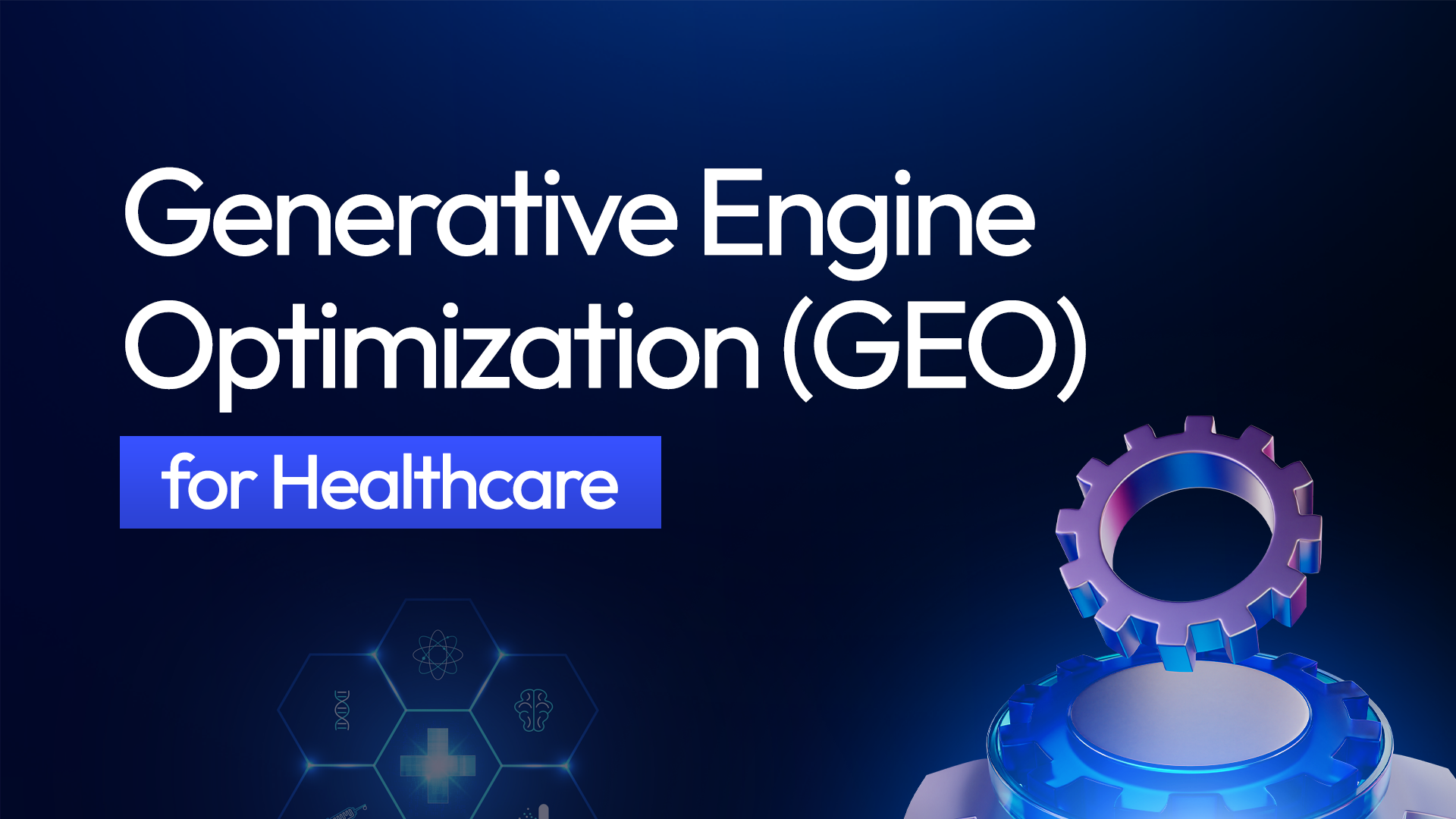
For doctors, clinics, and healthcare brands, showing up in a traditional search result is no longer enough. To capture the modern patient, your digital presence must be optimized for the AI models themselves. This new discipline is called Generative Engine Optimization (GEO).
What is Generative Engine Optimization (GEO)?
GEO is an emerging strategy that blends the foundations of traditional local SEO with advanced optimization for AI-powered search engines. Instead of simply optimizing for keywords to rank on a results page, GEO focuses on structuring your website’s data and content so that large language models (LLMs) can easily parse, verify, and cite your practice in their generated answers.
In a generative search environment, visibility does not begin on your website; it begins within the computational synthesis of the AI model. If your clinic or healthcare brand is absent from this synthesized answer layer, you are effectively excluded from the modern patient’s decision-making process.
Why Healthcare Brands Must Adapt Immediately
The behavioral shift toward AI search is moving at an unprecedented pace, driven by younger demographics and a desire for immediate, comprehensive medical answers:
- The Rise of AI Recommendations: As of early 2026, 45% of consumers rely directly on AI tools for local business and medical practice recommendations - a massive 650% increase from the prior year.
- The "Zero-Click" Environment: When an AI Overview satisfies a user's medical query directly on the search page, traditional organic click-through rates (CTR) drop by up to 34.5%.
- Highly Qualified Referrals: While total website traffic from generic searches may decrease, traffic referred by AI platforms is incredibly valuable. Because the AI acts as an autonomous qualification filter, AI-referred patients convert at a rate four to five times higher than traditional search traffic.
The 4 Pillars of GEO for Medical Clinics and Brands
Transitioning from SEO to GEO requires a sophisticated upgrade to your digital architecture. Success in AI-driven patient discovery relies on four core pillars:
1. Entity Consensus and Directory Accuracy
Generative engines prioritize consensus data to avoid hallucinations (providing false information). Consequently, over half of all AI recommendations now reference third-party medical directories rather than the provider’s proprietary website. To rank in local AI searches, healthcare brands must enforce absolute consistency of their Name, Address, and Phone (NAP) data across every relevant medical directory, aggregator, and platform.
2. Schema Markup 2.0 (Structuring Data for Machines)
Unstructured text is mathematically insufficient for AI extraction. Technical teams must deploy advanced JSON-LD formatting (Schema Markup 2.0) to guarantee factual fidelity. By embedding specific schema tags - such as MedicalClinic, Physician, MedicalCondition, and FAQPage - you explicitly map your clinical relationships for the AI. This allows AI knowledge graphs to interpret your expertise and cite it without hesitation.
3. Extractable, Conversational Content
The era of keyword-stuffed, generic service pages is over. AI models reward websites that directly answer the highly specific, conversational queries patients use. Content should be reformatted for immediate algorithmic extraction by utilizing:
- TL;DR Summaries: Concise answers at the absolute top of clinical pages.
- Tabular Data: Comparison tables and structured bullet points, which AI engines heavily favor for direct quotation.
- Citation Magnets: Hard statistics, case study data, and original research.
4. E-E-A-T and Clinical Governance
Because healthcare is categorized under the highest tier of "Your Money or Your Life" (YMYL) algorithms, trust signals heavily outweigh keyword frequency. Content must aggressively demonstrate Experience, Expertise, Authoritativeness, and Trustworthiness (E-E-A-T). Ensure every medical page features visible authorship by verified practitioners, recent "last updated" timestamps, and explicit citations to peer-reviewed literature.
Building an AI-Ready Digital Framework
Adapting to Generative Engine Optimization is not merely a marketing update; it is a fundamental technological upgrade to your digital infrastructure. The clinics and healthcare networks that thrive in this new era will be those that transition their data to speak the language of machines seamlessly.
At Clousor Technologies Pvt Ltd, we understand that navigating the intersection of clinical compliance and advanced AI architecture requires more than off-the-shelf solutions. Achieving prominence in AI-generated answers demands intelligent digital frameworks, pristine data structuring, and a forward-thinking approach to technological integration. By engineering your digital presence for the algorithms of tomorrow, we ensure that your healthcare brand isn't just searchable - it becomes the trusted, definitive answer.
Position your practice at the forefront of patient discovery. The future of healthcare visibility is generative; make sure your brand is part of the conversation.
Disclaimer:
This article is for educational purposes and does not replace professional clinical advice. While Clousor Technologies builds advanced digital architectures to enhance your AI discovery, we strongly advise that all AI-assisted medical content be verified by qualified healthcare professionals to ensure absolute accuracy and build patient trust. We are deeply committed to supporting patient privacy and regulatory compliance (such as HIPAA and GDPR); however, due to the constantly evolving and dynamic nature of AI search algorithms, specific generative ranking placements cannot be guaranteed.
 to secure citations in Google AI Overviews..png)