For decades, the lifeblood of a medical practice was the referral. A patient trusted you because another doctor, or a family member, vouched for your expertise. In 2026, that "vouching" process has fundamentally changed. Today, the most influential referral doesn't come from a colleague - it comes from an algorithm.
When a patient in a competitive hub searches for a specialist, they aren't just looking for a name; they are looking for validation. They want to know who you are, where you studied, and what specific conditions you treat.
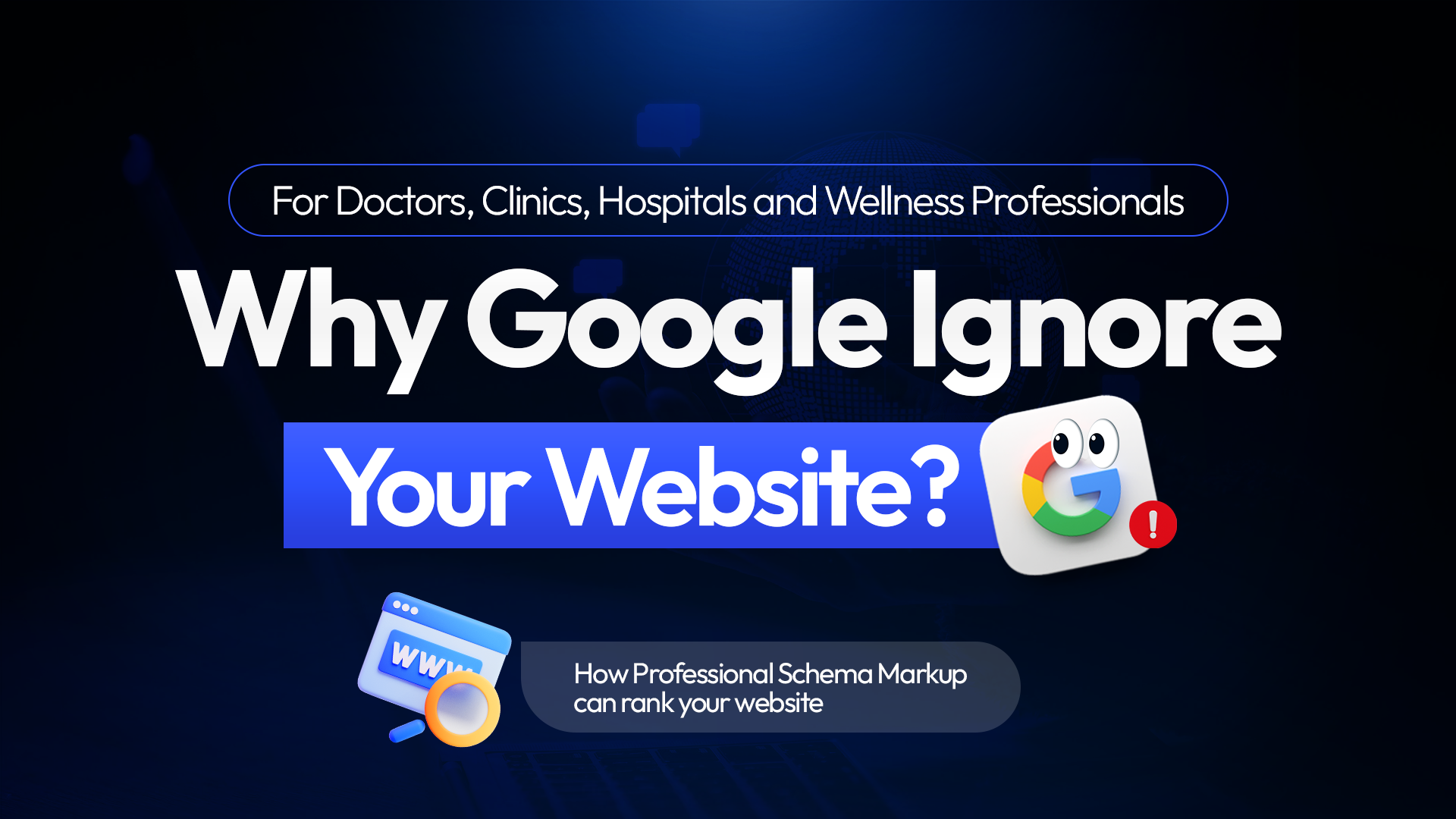
Most doctors have websites that list this information in plain text. But here lies the critical gap: Google’s AI doesn’t read websites like a human; it reads them like a machine. To bridge this gap, modern medical practices are turning to a specialized digital language called Schema Markup.
The Digital Identity Crisis
A foundational challenge for many doctors is what search experts call "entity ambiguity." Search engines struggle to distinguish between the physical building (the clinic) and the professional personhood (the doctor).
If your website uses generic coding, Google might view your practice merely as a "Local Business," similar to a coffee shop or a retail store. This is a missed opportunity. By implementing specific Schema Markup, you transform your digital presence from a simple webpage into a defined "entity" within the Google Knowledge Graph.
This acts as a digital handshake. It tells the search engine: for example - "I am not just a business. I am an IndividualPhysician. I am an alumnus of AIIMS. I treat Type 2 Diabetes. My medical license is registered with the Delhi Medical Council."
Why "The Code" Matters More Than Keywords
You might ask, "Why bother with hidden code if my content is good?" The answer lies in how patient behavior and search technology have evolved.
1. Trust and Authority (E-E-A-T)
In healthcare, Google applies its strictest standards, known as E-E-A-T (Experience, Expertise, Authoritativeness, and Trustworthiness). Schema markup is your tool to prove these traits mathematically. By using properties like alumniOf (to show where you studied) and medicalSpecialty (to define your field), you provide machine-verifiable proof of your credentials. This "digital seal of authenticity" is crucial for appearing in high-stakes clinical queries.
2. Visual Prominence (The "Star" Factor)
Have you ever noticed search results that feature gold stars, FAQs, or "Book Appointment" buttons directly in the list? These are called Rich Results, and they are powered by schema.
- Review Schema: Nesting review data allows star ratings to appear under your name, significantly increasing the likelihood that a patient clicks on your profile over a competitor's plain link.
- FAQ Schema: Answering common questions like "Do you accept insurance?" in your code can land your answers directly on the search results page, dominating the screen real estate.
3. The AI Revolution is Here
The way patients search is shifting from "browsing links" to "asking AI" With the rise of tools like Google's AI Overviews and ChatGPT, the goal is no longer just to rank #1 - it is to be cited by the AI as the source of truth. AI models prefer structured data because it is unambiguous. When you tag a procedure with a specific code (like an ICD-10 code via the medicalCode property), you make it easy for an AI to confidently match your expertise with a patient's symptoms. Research suggests that websites with rich schema are far more likely to be cited in AI-generated answers.
The "Hyper-Local" Advantage
For practitioners in India, schema offers a unique competitive edge by catering to local search habits. For example-
- In Chandigarh: Patients often search by sector (e.g., "Skin specialist in Sector 17"). Schema allows you to define your PostalAddress with this level of granularity, helping you rank for these hyper-specific searches.
- In Delhi: Linking your profile to your specific registration with the Delhi Medical Council (DMC) via the sameAs property acts as the ultimate verification signal, distinguishing you from thousands of others with similar names.
The Future is Structured
As we look toward 2026, the digital landscape will likely be dominated by "multi-agent systems" - AI assistants that book appointments and triage patients automatically. In this future, your Schema Markup will be the protocol that allows these agents to interact with your practice.
Bridging the Technical Gap with Clousor
Understanding the strategy of Schema Markup is one thing; implementing it is another. One missing comma in the code can cause a "silent failure," where Google ignores your data entirely. Furthermore, as you update your certifications or clinic hours, your digital code must evolve instantly to avoid penalization.
This complexity is why many leading practitioners are moving away from DIY solutions.
At Clousor, we understand that your focus belongs on the patient, not the JSON-LD code in your website's header. We specialize in constructing the intricate digital infrastructure that modern medical practices require. From ensuring your IndividualPhysician schema is perfectly nested to validating your credentials for the AI era, Clousor manages your digital entity so you can manage your practice.
Don't let your expertise remain invisible to the algorithms. Let Clousor translate your qualifications into the language of the future.
Disclaimer: This article is for informational purposes only and does not constitute technical or legal advice regarding search engine compliance or medical advertising regulations. While schema markup is a powerful tool for search visibility, search engine algorithms are proprietary and subject to change without notice; therefore, specific ranking results cannot be guaranteed.
 to secure citations in Google AI Overviews..png)