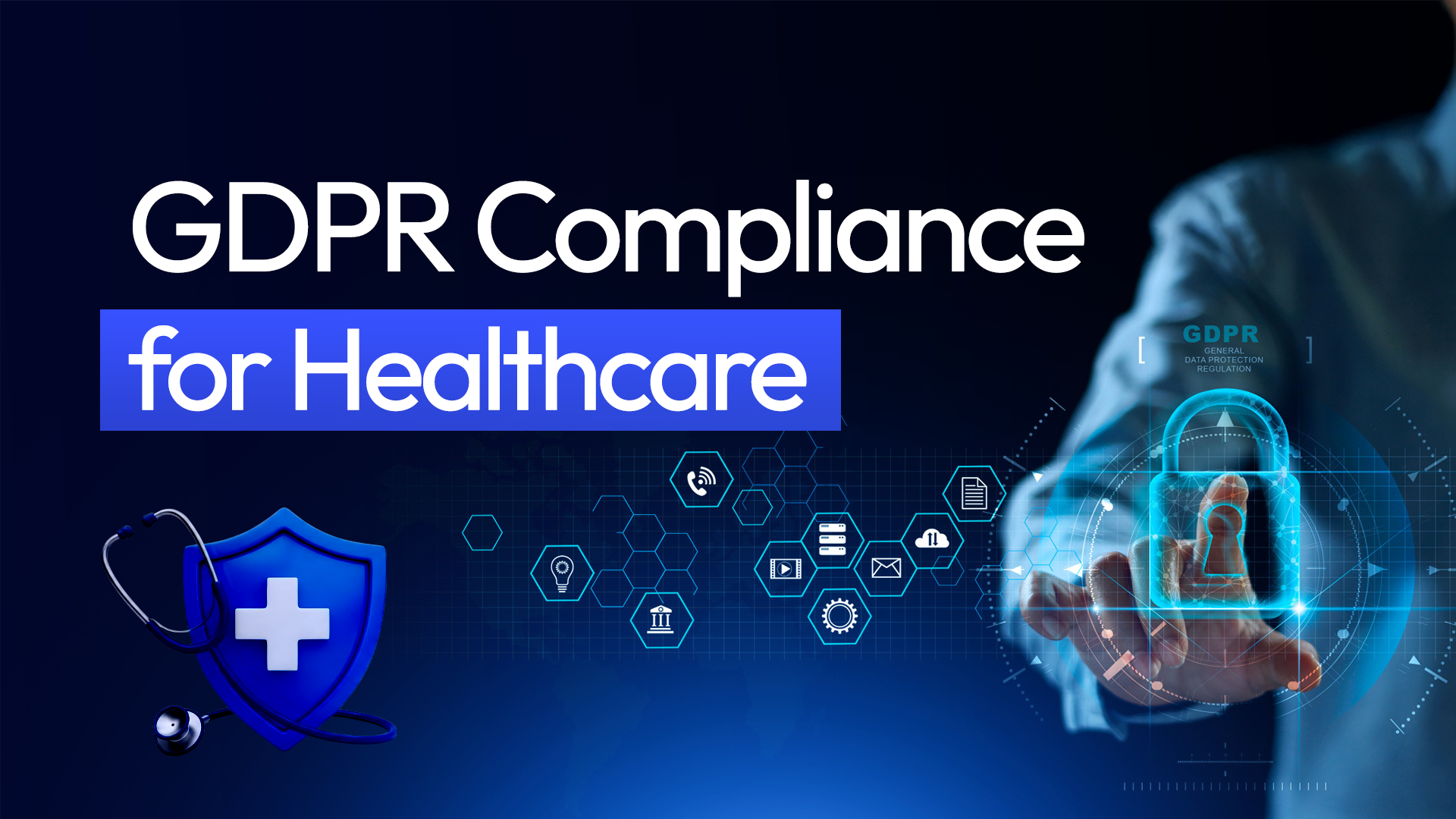
The digital transformation of healthcare has closely intertwined clinical efficacy with digital integrity. As healthcare organizations migrate to integrated, AI-driven platforms, the volume of data processed has increased exponentially. Under the General Data Protection Regulation (GDPR), protecting this data is no longer a peripheral legal checkbox, but a core strategic pillar for clinics, hospitals, and health startups.
This comprehensive guide explores the nuanced requirements of GDPR healthcare compliance, providing a framework for securing healthcare websites, patient forms, digital marketing systems, and AI automation.
What GDPR Means for Healthcare
The GDPR fundamentally shifted the data paradigm toward a model of stewardship and transparency, placing strict limits on how medical providers manage patient information.
Why Healthcare Data is Considered Sensitive Data
Under GDPR Article 9, health data is classified as a "special category" of personal data. This classification demands a higher threshold of protection because unauthorized disclosure can lead to severe risks, including social stigmatization, discrimination, or economic loss. In the digital sphere, protected health data extends beyond Electronic Health Records (EHRs) to include:
- Inferred health status based on website browsing patterns (e.g., visiting a page related to oncology).
- Information collected from wearable health trackers via patient portals.
- Details revealed in chatbots or WhatsApp triage conversations.
- Data points in a CRM tracking a patient’s journey through medical departments.
GDPR Rules for Health Data Processing
To legally process health data, a healthcare organization must identify a lawful basis under Article 6 and a specific condition under Article 9. For direct medical care, clinicians typically rely on the "medical diagnosis/treatment" condition (Article 9(2)(h)), which limits the patient's right to object as data is held under a duty of confidentiality. However, any processing outside of direct care - such as marketing or optional services - demands explicit consent (Article 9(2)(a)). Explicit consent requires an unambiguous, active statement of agreement, such as an un-pre-ticked checkbox.
Key Legal Principles Affecting Healthcare Organizations
Healthcare data processing must adhere to the foundational principles of GDPR Article 5:
- Data Minimization: Collecting only the data strictly necessary for a specific goal.
- Purpose Limitation: Ensuring data collected for medical treatment is not surreptitiously used for marketing.
- Integrity and Confidentiality: Using state-of-the-art encryption and access controls to prevent data breaches.
- Accountability: Maintaining Records of Processing Activities (RoPA) to prove compliance.
GDPR Rules for Healthcare Websites and Patient Forms
A healthcare website is often the first regulatory touchpoint. From an operational perspective, it must perform well; from a GDPR perspective, it must be legally secure.
Patient Intake and Lead Generation Forms
Every contact request or intake questionnaire is a data collection engine. Healthcare form GDPR rules dictate strict data minimization. For example, asking for a patient's date of birth and full address when only a name and phone number are needed for a callback constitutes a compliance failure.
Appointment Booking Forms and Patient Portals
Integrated booking systems and patient portals must follow a "Privacy by Design" approach. A compliant booking workflow should:
- Encapsulate data within a secure, encrypted environment.
- Provide a clear, accessible link to the comprehensive Privacy Policy at the point of entry.
- Avoid sending clinical details via unencrypted automated emails.
- Allow patients to view and manage their health profiles to support their "Right of Access".
Consent Collection and Documentation
Consent must be "freely given, specific, informed, and unambiguous". Organizations must ensure granularity, allowing patients to consent to medical treatment without being forced to opt into marketing. Pre-ticked boxes are invalid, and patients must be able to withdraw consent as easily as they gave it.
GDPR and Healthcare Digital Marketing
Healthcare digital marketing compliance requires navigating strict limitations, as traditional advertising tools face intense regulatory scrutiny.
Email Marketing and Marketing Automation
Direct email marketing and SMS to patients require explicit opt-in consent; healthcare providers cannot rely on vague "legitimate interest" for patient outreach. Marketing lists must be segregated so that data collected under medical necessity is not repurposed for promotions. Good practice dictates double opt-in workflows and clear unsubscribe links on all communications.
Cookies, Analytics Tools, and Tracking Pixels
Tracking pixels (like the Meta Pixel or Google Analytics tag) track user behavior to build profiles for targeted advertising. In healthcare, this is inherently risky: tracking a visitor on a "diabetes symptoms" page can inadvertently transmit sensitive health inferences to social media platforms. Healthcare websites must implement compliant cookie banners requiring active opt-in before non-essential tracking scripts run.
To minimize risk, many organizations are shifting to Server-Side Tracking, which scrubs sensitive identifiers before sending data to ad networks. When using analytics tools like Google Analytics (GA4), IP addresses must be anonymized, and data-sharing features disabled.
Remarketing and Ad Platforms
Remarketing - showing ads to people based on their previous website visits - is highly dangerous in healthcare. Showing a user a retargeted ad for cancer screenings because they visited an oncology page can lead to unauthorized disclosure of health interests to anyone sharing the user's device. Experts broadly discourage invasive remarketing in the medical sector.
AI, Automation and Healthcare Data
The integration of HealthTech presents significant compliance challenges. Since health data is sensitive, AI automation healthcare privacy rules demand enhanced safeguards.
Chatbots, AI Assistants, and Patient Engagement
Symptom-checker chatbots or virtual assistants that profile user health information require explicit consent and a formal Data Protection Impact Assessment (DPIA) due to high risk. Patients must be transparently informed that they are speaking with an AI assistant.
Risks of Automated Data Processing
Under GDPR Article 22, individuals have the right not to be subject to solely automated decisions that produce significant effects. In healthcare, diagnostic AI or triage chatbots must incorporate "Meaningful Human Review." Clinicians cannot simply "rubber-stamp" an AI's decision; the tools must remain assistive rather than deterministic.
WhatsApp Automation and Messaging Systems
The standard WhatsApp Business App syncs contact lists to Meta's servers, violating GDPR. Compliant messaging requires the WhatsApp Business API, which offers end-to-end encrypted channels and Double Opt-In (DOI) functionality to ensure patients have actively confirmed they wish to receive messages.
CRM Automation Workflows
A healthcare CRM is the single source of truth but must enforce strict healthcare CRM data protection. Marketing or administrative staff should never have access to diagnostic images or lab results. Every automated action in the CRM must be logged to maintain accountability.
Technical Implementation Requirements
To meet the "Security of Processing" mandate under Article 32, digital systems must deploy state-of-the-art technical safeguards.
Secure Form Development
Forms must be protected against injection attacks and data leaks using tokenization and CAPTCHA. Crucially, form data must not be stored in default Content Management System (CMS) databases (like standard WordPress databases) where it is accessible to general IT staff without clinical clearance.
Encryption and Secure Storage
Patient data must be encrypted in transit using TLS 1.3 and at rest using AES-256. Decryption keys must be rotated regularly and never stored on the same server as the health data.
Role-Based Access Control (RBAC)
Systems must implement the principle of "Least Privilege" through strict RBAC. Multi-Factor Authentication (MFA) is mandatory for all staff accessing patient data, alongside automatic logoff timers for inactive sessions.
Audit Logs and Data Traceability
Organizations must maintain immutable audit trails detailing exactly who accessed a patient record, when they accessed it, what action they took, and why.
Third-Party Processor Management
Before deploying third-party tools (EHR systems, CRM, email platforms), healthcare organizations must conduct privacy due diligence and sign Data Processing Agreements (DPAs) that legally bind vendors to GDPR standards.
Real GDPR Enforcement Examples in Healthcare
Regulators actively enforce these rules, levying significant fines for non-compliance:
- Weak Access Controls: A Portuguese hospital was fined €400,000 when regulators discovered 985 active doctor profiles for a staff of 296, giving dietitians and psychologists unrestricted access to all patient records.
- Inadequate Security: A UK software vendor serving the NHS faced a provisional £6.09 million fine following a ransomware attack, citing a lack of MFA and outdated systems as "serious failings".
- Tracking Pixel Violations: A Norwegian children's crisis helpline was fined €25,000 for inadvertently sharing sensitive website visitor data with Meta and Snapchat via tracking pixels.
- Organizational Deficits: A German hospital was fined €105,000 after a patient admission mix-up exposed sensitive data due to technical and organizational failures.
Common Compliance Mistakes in Healthcare Digital Systems
Healthcare organizations frequently fall into these traps:
- The "WordPress Default" Error: Storing sensitive form submissions in standard website databases accessible to general staff.
- Dark Patterns in Consent: Using design tricks to nudge patients into accepting non-essential cookies.
- Vague Privacy Policies: Failing to specify exact data uses, such as targeted advertising.
- No Vendor DPAs: Utilizing new marketing tools or software without signed Data Processing Agreements.
- Excessive Data Collection: Gathering more personal details than necessary for clinical care.
GDPR Compliance Checklist for Healthcare Organizations
For executives and IT leaders, this checklist helps audit secure patient data systems:
- Data Inventory & RoPA: Map all patient data flows and maintain a Record of Processing Activities.
- Lawful Basis & Consent: Identify legal bases for care and secure explicit opt-in consent for marketing.
- Privacy Notices & Cookies: Publish clear privacy policies and deploy compliant cookie banners.
- Technical Safeguards: Implement AES-256/TLS 1.3 encryption and mandate MFA for all staff logins.
- Access Controls: Enforce strict RBAC in CRMs and EHRs.
- Vendor Management: Sign DPAs with all third-party processors.
- DPIAs: Conduct Data Protection Impact Assessments for high-risk tools like AI triage.
Best Practices for Building Compliant Healthcare Technology Systems
To remain competitive, healthcare organizations must view compliance as a foundational element of patient trust.
Integrating GDPR principles at the architectural start of a project - known as "Privacy by Design" - is essential. Because generic web agencies often lack clinical understanding, many healthcare providers partner with specialized technology firms. For instance, Clousor Technologies Private Limited specializes in building legally safe digital systems, deploying patient intake forms with built-in consent capture, implementing encrypted WhatsApp API communication, and architecting compliant CRM automation workflows. By aligning technology projects with data protection principles from the ground up, healthcare organizations can scale their operations while ensuring data is securely managed in the background.
Additionally, organizations should shift toward first-party data strategies, cultivating deep patient relationships through secure newsletters and explicitly consented communication, rather than relying on invasive third-party tracking.
Frequently Asked Questions (FAQ)
Q: Is patient data considered sensitive under GDPR? A: Yes. Under GDPR Article 9, health information is a "special category" of personal data. Its processing is prohibited unless a specific condition applies, such as explicit patient consent or medical necessity for direct healthcare services.
Q: Do healthcare websites need consent for analytics cookies? A: Yes. Healthcare websites must obtain clear, affirmative consent before placing analytics or marketing cookies. Essential cookies (e.g., for secure login sessions) are exempt, but all tracking scripts require an active opt-in.
Q: Can healthcare providers use marketing automation under GDPR? A: Yes, but only with proper safeguards. Using patient data for marketing automation (email campaigns, SMS) requires a lawful basis - typically explicit opt-in consent. Patient consent for medical care does not automatically cover marketing communications.
Q: What is the biggest risk with AI chatbots in healthcare? A: The primary risk is "automation bias," where human staff blindly follow an AI's diagnostic suggestions. This violates GDPR Article 22, which requires meaningful human involvement in decisions that produce significant effects on an individual.
Q: How long should we keep digital patient records? A: This depends on national medical laws (e.g., clinical liability periods). However, once the legal retention period expires, the GDPR requires that the data be securely deleted or fully anonymized.
Q: What are the first steps for a clinic to get GDPR-compliant? A: Start with a data audit: document all patient data collected, the purpose, and retention periods. Update your privacy policy and cookie banner, ensure SSL encryption on all forms, and train staff on basic GDPR concepts like consent and access control.
Disclaimer: This article is for informational and educational purposes only and does not constitute legal advice. The regulatory landscape regarding the GDPR, ePrivacy Directive, and other data protection laws is subject to change. Healthcare organizations should consult with qualified legal counsel or a certified Data Protection Officer (DPO) to ensure specific compliance in their jurisdictions.
 to secure citations in Google AI Overviews..png)