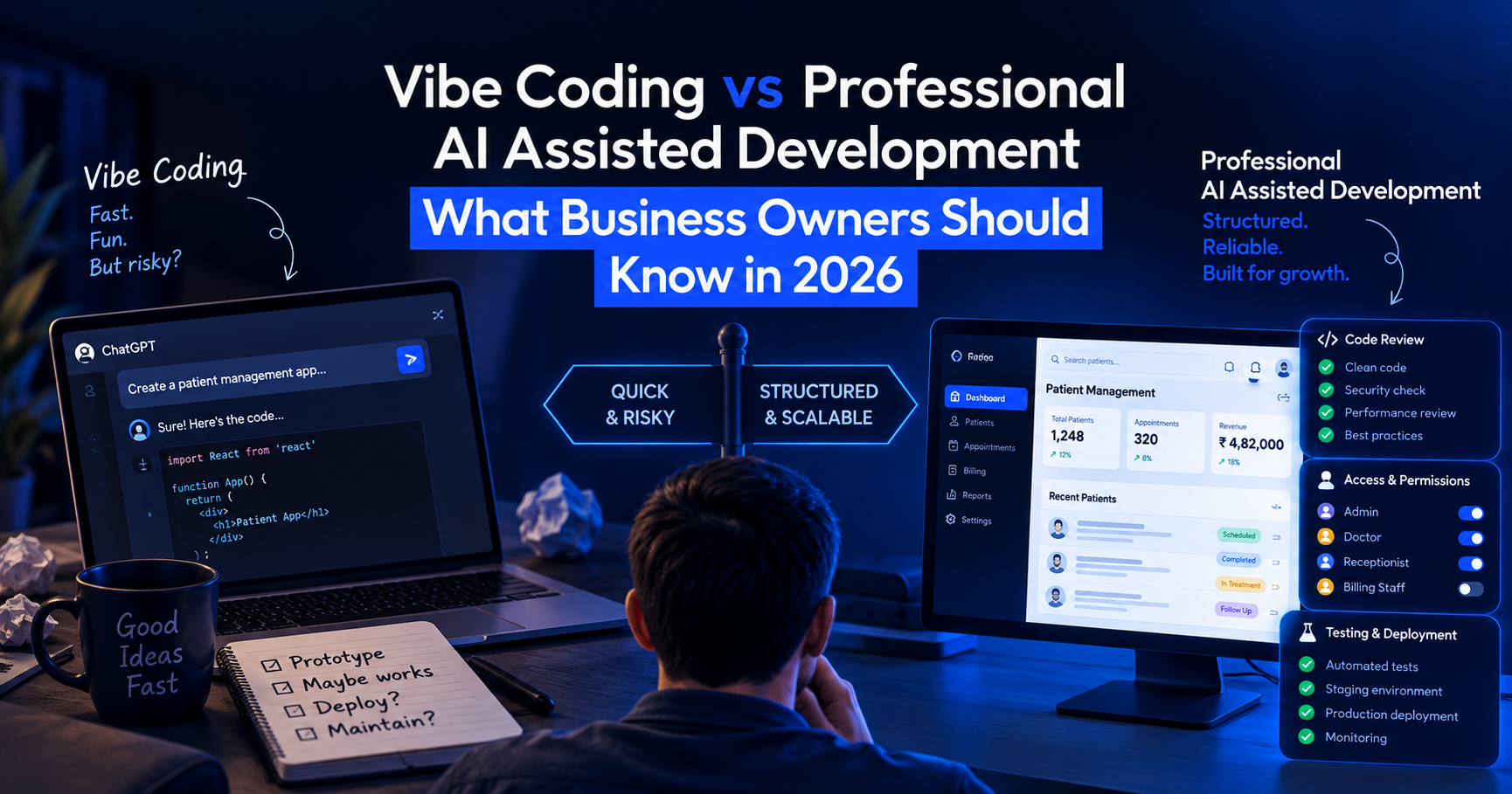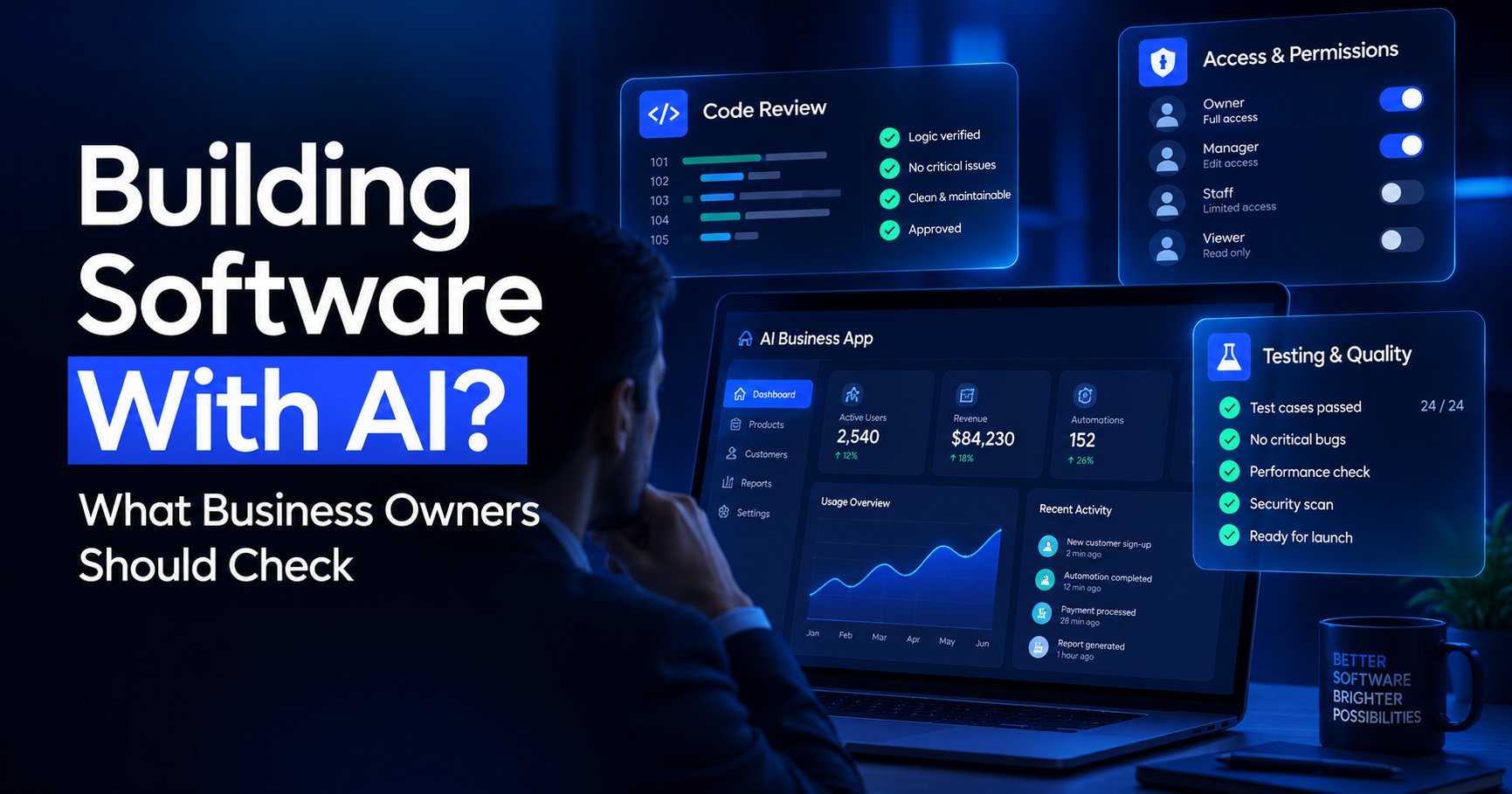
Yes, AI can help build business software, including dashboards, booking tools, customer portals, and workflow automation. It can speed up development and make it easier to test an idea.
But a working demo does not establish that software is secure, reliable, or ready for customers. For business owners, the important question is whether the software can protect your data, support your operations, and remain manageable as your business grows.
What Is Vibe Coding?
Vibe coding commonly describes building software by telling an AI tool what you want, then refining the result through prompts, often without closely reviewing the underlying code.
This differs from AI-assisted development where developers inspect, test, and maintain what AI produces. The level of oversight matters more than the tool's name. AI can support production software development. Launching without understanding or validating the result creates avoidable business risk.
Five Risks Business Owners Should Understand
1. Security Problems Can Hide Behind a Polished Interface
A professional-looking app may still expose customer records, mishandle passwords, or give users access to information they should not see. For example, a customer portal might display the correct dashboard while failing to check whether someone is authorised to open another customer's records.
GitHub's guidance recommends using AI-generated code alongside testing, code review, security tools, and human judgment. Automated checks help, but they do not establish that an application is safe.
2. Sensitive Data Needs Deliberate Protection
Before connecting real customer or patient data, understand where information is stored, which providers can access it, and how deletion and retention work. Also check what your coding tool receives through prompts, logs, and connected services.
For healthcare businesses, a booking form may collect sensitive information before a patient ever attends a consultation. Clousor's compliance-based approach means considering these data flows during planning. Adding a privacy notice at launch cannot fix an unsuitable system design.
3. A Successful Demo Can Miss Expensive Failures
A booking tool might work with one test user but allow two customers to reserve the same slot. An automation might send duplicate messages after a retry. A payment workflow might record an order even when payment fails.
These failures affect revenue, staff workload, and customer trust. Test ordinary journeys and failure scenarios before launch, including interrupted connections, incorrect inputs, permission restrictions, and failed integrations.
4. Fast Development Can Create Ongoing Costs
The initial build is only part of the investment. Hosting, subscriptions, usage charges, maintenance, security updates, and support all contribute to the total cost.
Software also needs a clear owner. Someone must understand how it works, fix problems, and manage changes when connected services update. NIST's software development guidance emphasises human validation and verifiable processes for AI-generated content. That discipline remains necessary after the first version launches.
5. Platform Dependence Can Limit Your Options
Before committing to an AI app builder, check whether you can export your code and data, move hosting, and give another developer access. Review the platform's terms and the licences of third-party components, too. Paying for a tool does not answer every question about ownership or future portability.
A Practical Way to Start
Begin with a narrow workflow and synthetic test data. An internal reporting prototype usually carries different risks from a live patient portal or payment system.
Before expanding access, establish:
· Independent technical review and testing appropriate to the application.
· Clear permissions, secure handling of credentials, and suitable data controls.
· Working backups, a tested recovery process, and someone responsible for support.
· A measurable business objective, such as reducing manual administration or booking errors.
This reflects Clousor's compliance-based, performance-driven approach to marketing and automation: protect trust, solve a defined business problem, and measure whether the solution delivers value.
Build Around Business Value
AI can make business software faster to create. Its value depends on the quality of the workflow, the controls around it, and the results it produces.
Planning an AI-built tool for your healthcare business? Talk to Clousor about your workflow, growth objectives, and compliance considerations before deciding what to build.